The Fundamentals of Design-Led CRO

Here’s the uncomfortable truth nobody likes admitting: your website might look gorgeous, but if it isn’t converting visitors into customers, it’s essentially an expensive digital paperweight. Organisations that invest only or at least disproportionately in the marketing aspects of CRO miss out on the advantages design can do for their customer retention. The reality is that beautiful aesthetics alone won’t save a failing conversion funnel. Design must work hand in hand with CRO strategy to create experiences that address the users core needs with clear actions. This integration of form and function, of visual appeal and psychological persuasion, separates truly effective digital experiences from those that merely look the part.
More than Conversions
Conversion rate optimisation sits at the centre of interconnected metrics determining business success. When you improve conversion rates, you simultaneously reduce customer acquisition cost (CAC) and increase potential for higher customer lifetime value (CLV). The mathematics are straightforward. Spend £10,000 on marketing to convert 100 visitors and your CAC is £100. Double your conversion rate through design optimisation and that same £10,000 acquires 200 customers, dropping your CAC to £50. You’ve made every pound of marketing spend twice as efficient.
Good design-led CRO strategy doesn’t just convert visitors once, because, let’s face it, customers and users need to be “wooed” more than once. A design-led CRO strategy identifies and maximises the interactions that overlap with good UX and those intertwined with the profit generating aspects of the organisation, regardless if it’s a charity or a fortune 500 company. Smooth, intuitive experiences keep customers engaged, increase key actions frequency, and build trust that makes them less sensitive to competitor pricing. When customers find your platform easy to use, they return. This directly impacts customer lifetime value.
Successful businesses track the LTV:CAC ratio, often called the “god metric” of sustainable growth. The benchmark suggests aiming for a ratio of at least 3:1, meaning each customer should generate three times what you spent to acquire them. Design optimisation improves both sides simultaneously: reducing acquisition costs whilst extending and deepening customer relationships.
The Hidden Cost of Bad Design

A staggering 88% of users are less likely to return to a website after a bad experience. This statistic reveals the true cost of poor design decisions. You’re not just losing one potential conversion. You’re losing the lifetime value of that customer and anyone they might have referred. Every visitor who bounces represents wasted marketing spend. High bounce rates don’t just hurt conversion rates. They inflate customer acquisition costs by burning through your marketing budget without acquiring customers.
Shopping cart abandonment provides another lens on design’s comprehensive impact. Adding help sections, guarantees, live customer support, customer testimonials, backend improvements, and shortened form need to work in concert to convert. Lower abandonment means better conversion efficiency and fewer frustrated customers abandoning purchases.
The lesson here feels almost embarrassingly obvious once stated. Companies that leverage effective CRO processes stay ahead of competition rather than settling for average conversion rates. Yet countless businesses continue optimising for traffic whilst ignoring the leaking bucket of poor conversion design. They celebrate increased visitor numbers whilst their conversion rates stagnate, their acquisition costs climb, and their customer lifetime values decline. Traffic without conversion efficiency is just expensive noise.
Real Businesses, Real Results
We’ve talked a lot about theory and statistics, but let’s examine real world examples.
Seven Seas Worldwide
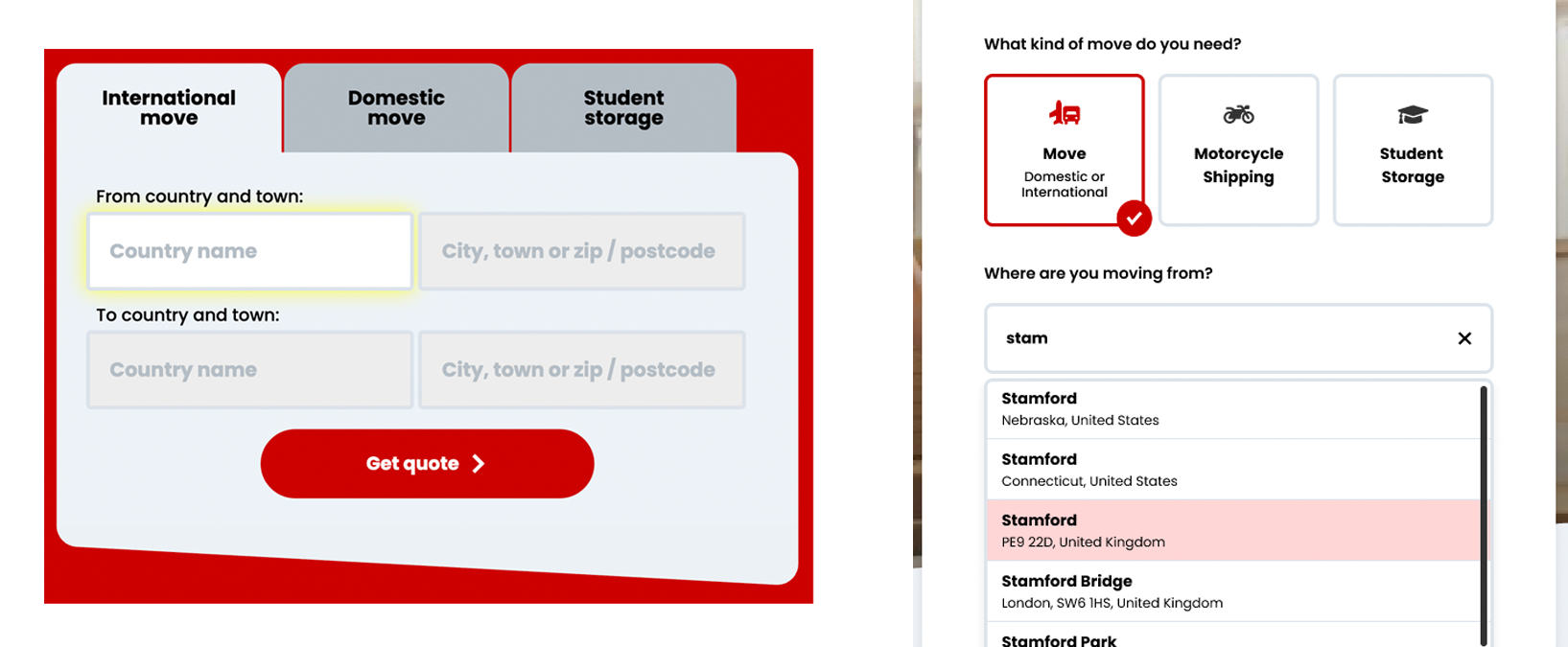
Seven Seas Worldwide’s platform redesign demonstrates how integrating conversion rate optimisation with user experience produces compound benefits. Their research phase examined everything from Airbnb’s date picker patterns to airline scheduling interfaces, translating four years of collected user feedback into actionable strategy. The team identified key friction points preventing conversions and opportunities to build lasting customer relationships.
One particularly insightful user story about environmental consciousness led them to implement Ecologi for carbon offsetting, serving dual purposes: converting environmentally conscious customers more effectively whilst building brand loyalty that encourages repeat bookings. The final platform integrated live pricing updates, save and resume functionality, and environmental impact calculators. The save and resume feature particularly impacts both metrics by converting hesitant customers who need time to decide whilst making repeat bookings effortless, encouraging customer loyalty and increasing lifetime value.
Walmart
This wasn’t simply about making things look better on smaller screens. The redesign addressed fundamental usability issues that were creating friction at every stage of the mobile shopping journey.
The 98% mobile conversion increase meant Walmart’s mobile marketing spend became nearly twice as efficient overnight, effectively halving their mobile customer acquisition cost. Simultaneously, the improved experience likely increased repeat purchase behaviour, as customers who enjoyed the smooth mobile interface had less reason to shop elsewhere. The compound effect of better conversion efficiency and improved customer retention transformed mobile from an afterthought into a primary revenue driver.
The Weather Channel
The Weather Channel took simplification to its logical conclusion, removing all clutter from their home page and focusing on only one action. This bold move caused an huge uptick in conversions, proving that focus beats choice paralysis every time.
Their previous homepage suffered from the common affliction of trying to serve every possible user need simultaneously, creating a paradox of choice that paralysed decision making. By identifying their primary conversion goal and ruthlessly eliminating everything that didn’t serve it, they created a frictionless path to action. The dramatic results demonstrate how removing options can actually empower users to act. Sometimes the best design decision is knowing what to take away rather than what to add.
Expedia
Consider Expedia’s famous optimisation story. They increased annual profit by £9.5 million simply by removing one field from their registration process. That field was creating friction preventing initial purchases, hurting conversion rates and inflating CAC, whilst simultaneously annoying existing customers making repeat bookings, damaging satisfaction and reducing CLV. The profit improvement came from fixing both problems simultaneously.
This case study reveals how a single design decision can cascade through multiple business metrics. Each winning test like this teaches teams something valuable about their customers, with this organisational learning accumulating over time and making entire marketing operations more effective. Businesses achieving exceptional results treat optimisation as ongoing practice, where insights compound and teams develop deeper understanding of what drives customer behaviour.
How to get started
Companies that perform A/B testing see an average conversion rate improvement of 49%, but testing requires discipline. Tests need sufficient sample size and duration, typically at least one to two weeks, to generate reliable results. Multi step forms can outperform single step forms when designed with clear progress indicators that reduce psychological burden. The key lies in removing unnecessary friction whilst maintaining necessary information collection.
Prioritisation frameworks help teams focus on changes that move the needle across multiple metrics. The ICE method scores potential tests on Impact, Confidence, and Ease, whilst PIE considers Potential, Importance, and Ease. Both transform gut calls into clear priorities, ensuring teams work on changes affecting revenue, acquisition efficiency, and customer retention rather than burning resources on low value experiments.
The smartest businesses use proven tactics as inspiration for hypotheses, then validate everything through rigorous testing whilst tracking impact across the full metric spectrum. Your audience remains unique. What worked for The Weather Channel might fail for your business. But understanding how conversion improvements ripple through to acquisition costs and customer lifetime value helps frame which tests matter most.
Conclusion
Conversion rate optimisation has evolved into business imperative because of how CRO connects to the broader financial ecosystem. When you optimise conversions, you simultaneously reduce acquisition costs and create conditions for higher customer lifetime value. This triple effect transforms modest improvements into substantial competitive advantages.
Making optimisation work requires rigorous testing discipline. Companies that perform A/B testing see average conversion rate improvements of 49%, but tests need sufficient sample size and duration to generate reliable results. Prioritisation frameworks like ICE and PIE help teams focus on changes that move the needle, transforming gut calls into clear priorities. The smartest businesses use proven tactics as inspiration for hypotheses, then validate everything through testing whilst tracking impact across the full metric spectrum.
Your competitors are optimising their conversion funnels, testing call to action buttons, and refining user journeys. The businesses pulling ahead treat optimisation as continuous practice, tracking LTV:CAC ratios alongside conversion rates and recognising that acquiring customers only makes financial sense when those customers stay long enough and spend enough to justify the acquisition investment.
Design directly impacts your bottom line through conversion rates, acquisition costs, and customer lifetime value. Your finance director isn’t waiting for better conversion percentages. They’re waiting for improved unit economics demonstrating sustainable growth. Better design doesn’t just convert more visitors. It converts them more efficiently and keeps them longer. That’s the business case that wins budget approval.
Special thanks to Shiva Smyth for the photo ❤️