Is UX Design Going to Die in 2027? No and here’s why.

Estimated reading time: 8 minutes
Key takeaways
- The production layer of UX design is being automated. The understanding phase shouldn’t be.
- AI has changed the speed of production. It shouldn’t change the thinking that has to precede it.
- Speed can be a positive multiplier with proper thinking. Without a clearly defined problem, it accelerates you towards the wrong answer.
- Outputs that look finished are not the same as outputs that are grounded. Polish is not a substitute for understanding.
- The discipline of design, deciding what should exist and why, remains entirely human work.
Output Is Not the Act

“Is UX Design Dead in 2026?” is a question that has been asked several times, especially in the last few years. So let’s look at answering it. First things first, let’s clear up some confusion; design is not an “output” but the process that leads to the output. Design gets talked about like it’s a deliverable: screens, mocks, prototypes, guidelines. Those are remnants of design, but they aren’t design. Design is the act of deciding what should exist, why it should exist, and what “right” looks like before you’ve committed to building it. That distinction is what the industry keeps failing to make, and it is the only thing that actually matters right now.
Of course, the pattern of design isn’t new. Every time production got faster, we built more without necessarily understanding more. AI has given us more screens, flows, and finished-looking artefacts than any previous tools. NN/g’s evaluation of AI design tools found that even capable tools produce outputs that look plausible but routinely ignore flows, accessibility, content constraints, and edge cases. Speed without grounding produces convincing work, which is a different thing from good work.
What’s happening to design
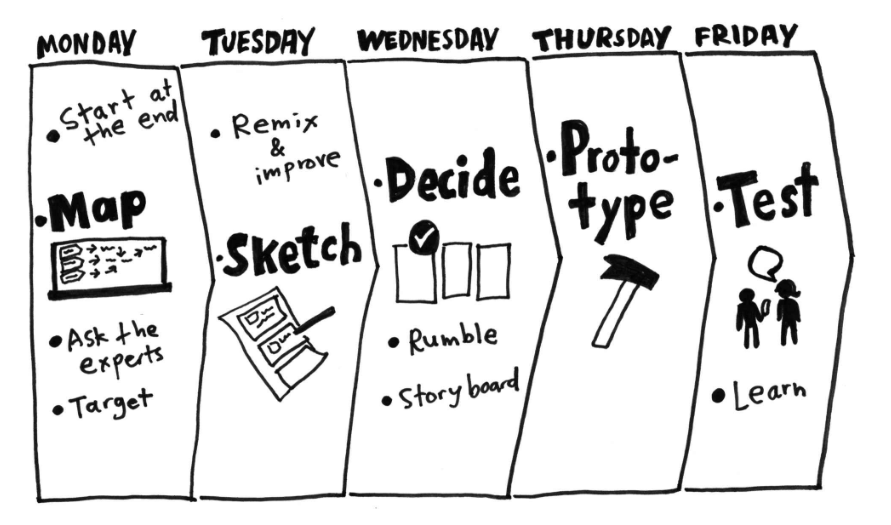
The concern, for me at least, right now is about how AI is affecting the production layer of design, the part that filled most job descriptions for the last two decades, is changing. Drastically. Some may argue collapsing. Some may argue improving. I personally lean towards something that lies in between the two.
In between collapse and improvement is a thin beam of “grunt” work that can be automated, limiting the organic intelligence involvement on the part of us humans. In theory, this frees up product specialists to dive into more nuanced work. Except does it?
Every UX space, both in behaviour and market niche, needs to be explored deeply to provide a solidly good experience. The automation aspect of AI provides an undeniable improvement in terms of output, but this output might be too shallow for its own good. It robs the product specialist, at every skill level, of the opportunity to explore and understand the space. Let’s discuss this further with a hypothetical comparison of process.
Let’s say we have two team, Team A and Team B, designing a dog walking app.
Team A uses AI to generate their user flows, screens, and onboarding in days. The output is clean. The interface follows established patterns: a booking screen, a map view, a walker profile, a rating system. It looks like every other app in the category, because it was trained on every other app in the category.
Team B spends time before touching a single tool. They talk to dog owners and discover that the anxiety isn’t about finding a walker; it’s about the twenty minutes after the walker leaves and before the first update comes through. They talk to walkers and find that the biggest daily friction isn’t scheduling; it’s owners who give unclear drop-off instructions and then can’t be reached. The time invested in these interviews and discovery process begins to create an intuition around the nature of the problems. Two very specific problems, neither of which shows up in a pattern library.
Team B’s app looks somewhat similar on the surface. But it has a live check-in that fires two minutes into every walk, and a pre-walk note field prompting owners to log gate codes, nervous behaviours, and a backup contact. Small things. Informed things. The kind of things you only know to build if you spent time in the space.
Six months in, Team B’s retention is considerably stronger. Not because their interface is more polished. Because it was built around a specific, understood reality rather than a general, assumed one.
Could Team A have thought of these things eventually? Certainly. But their over-reliance on AI to do the heavy lifting didn’t develop their design muscles.
How to use AI in the design process
So this begs the question: what is AI actually good for in the design process?
The answer is more specific than “use it for everything” and more optimistic than “save it for last.” The distinction lies entirely in what you bring to the tool before you open it.
When you’ve done the work described earlier, taking the time to understand the real friction, the specific anxiety, the gap between what users say they want and what they actually need, AI becomes an extraordinary execution partner. Not for defining the problem. For closing the distance between a well-understood problem and something real that people can interact with.
The most valuable application is in building the Minimal Viable Product (MVP). Not a pattern-library MVP assembled from assumed templates, but a targeted product built around the specific problems your discovery process has already identified. With AI-assisted execution, what would once have taken weeks, perhaps months, of engineering can happen in days.
The most valuable design conversation doesn’t happen in a Figma file, it happens when real users interact with something real. An MVP built on genuine insight, executed quickly with AI assistance, gets your team and your users into that real interaction far sooner. Teams gain something tangible to align around. Users respond to something they can actually use. Stakeholders make decisions from observed behaviour rather than from further assumption.
That real interaction, the moments where your assumptions are tested, where surprises emerge, where the gap between stated preference and actual behaviour becomes visible, is where design understanding genuinely deepens. No amount of internal iteration closes that gap. Only real people doing real things can. AI doesn’t replace that learning. It compresses the path to it.
The Purpose Has Not Changed
It’s true, the production layer is changing. Some of it is being automated, and some of that automation is genuinely useful, but what it can’t (and shouldn’t) automate is the curiosity, the immersion, and the judgement that has to precede production.
Design isn’t a role, moreover it’s a practice: the act of deciding what should exist, why it should exist, and what right looks like before anyone starts building. The engineer deciding how a system should behave is doing design. The marketer deciding what story to tell is doing design. Anyone working out a path to an outcome is doing design, whether they call it that or not.
Ultimately, the tools changed, but the work didn’t.
There is nothing more costly than shipping something that shouldn’t exist, whether it took two years or two days. I also recognise that this is merely one part of a larger conversation regarding AI and design. The impact on the job market and the value of the discipline is a deeper conversation for another time. For now, and for the scope of this article, embrace the tools that help your design discipline move forward efficiently. Speed is a multiplier. It amplifies whatever direction you are already moving in. If you have done the process, AI tools can help you realise it faster. If you haven’t, AI helps you arrive at the wrong place with more confidence and a polished interface to show for it.
FAQ
Is AI going to replace UX designers? Not the practice, but perhaps parts of the role. In our ‘Designing AI-Centric products of the Future’ article, we argue that the most successful designers won’t be those who prompt-engineer their way through every problem, nor those who reflexively resist AI, but those who can evaluate when it genuinely improves the experience versus when it adds complexity masquerading as sophistication. Judgement, interrogation, and systems thinking remain human.
Should I be using AI tools in my design process? That’s your call, but my take is yes, with intention. Use them after you’ve defined the problem, not to define it. Reach for them when they solve something specific and well-defined, not because the industry says you should. The risk isn’t necessarily using AI, it’s using it before you’ve done the core thinking that it requires to perform.
Can AI replace user research? Not in my opinion. AI simply doesn’t possess (yet) the multitude of complexities that form human behaviour, however rational or irrational it is. NN/g is explicit in highlighting that synthetic users and AI-generated research profiles are not substitutes for real human participants. The gap between what users say and what they do cannot be closed by a language model.