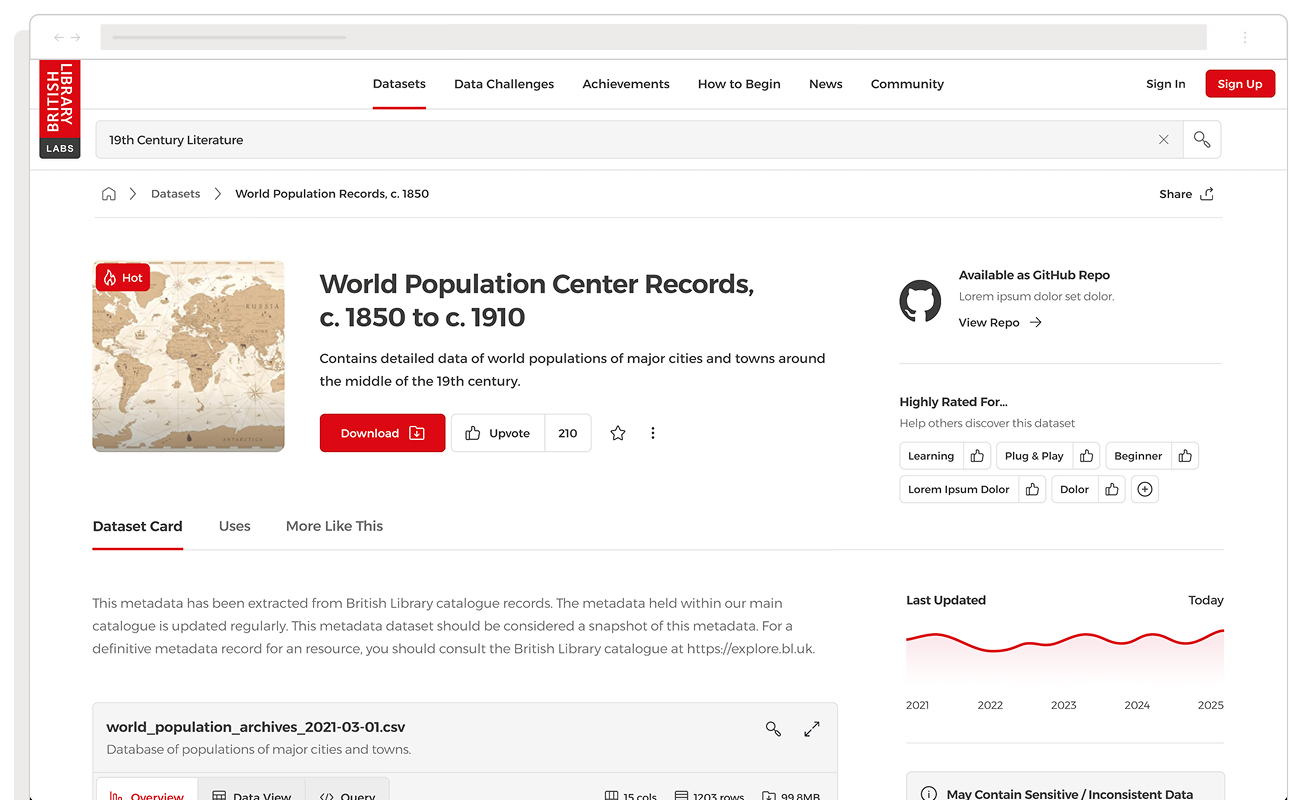
British Library – Labs
UX Strategy and UI Design for Multi-User Digital Data Research Platform

The British Library holds one of the world’s largest and most significant archival collections, spanning centuries of history, culture and human knowledge. British Library Labs, the institution’s experimental digital arm, set out to create a platform that could make these materials accessible to a broad spectrum of users. This ranged from casual visitors exploring family history to data driven researchers running complex computational analysis.
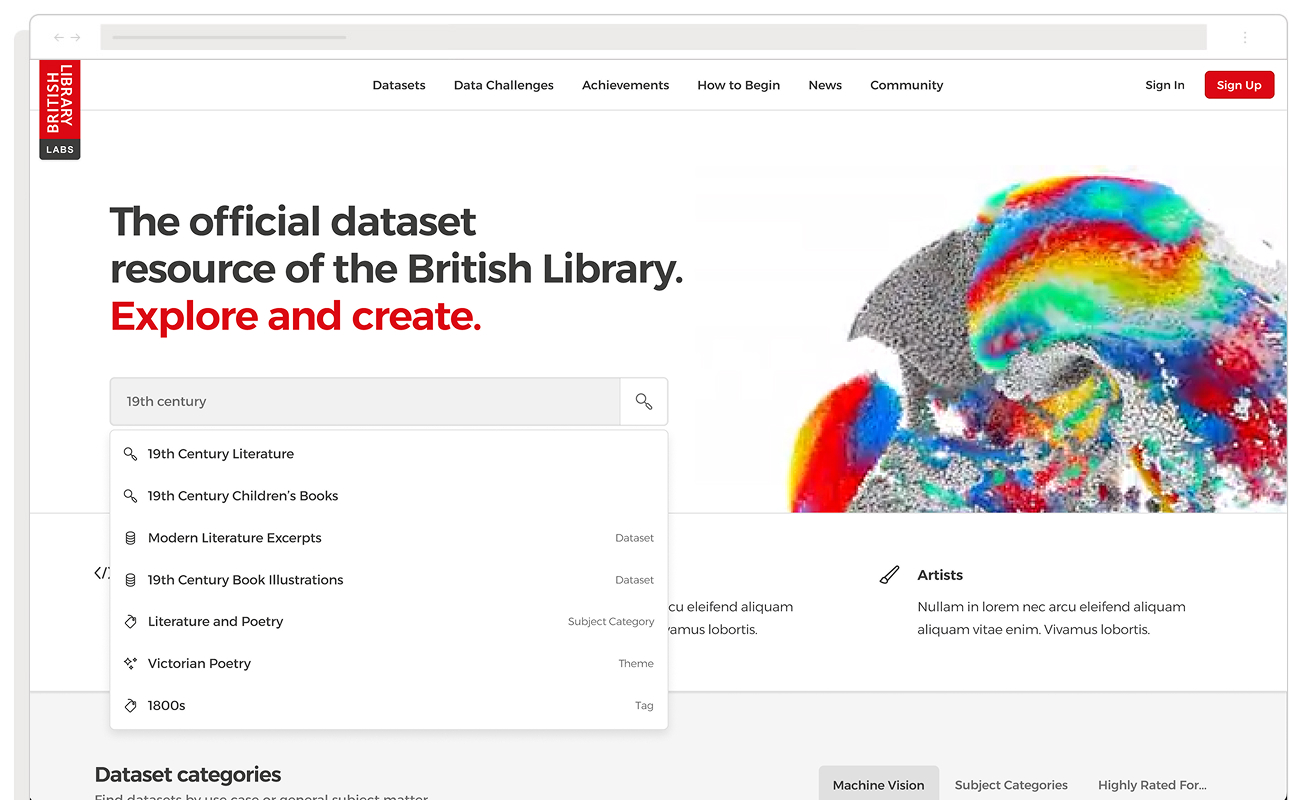
A diverse and demanding audience
The challenge was clear. While existing tools worked well for traditional researchers, they struggled to cater for newer user groups who expected intuitive navigation, visual cues and clearer entry points. At the same time, computational scholars needed advanced controls, granular data access and tools that allowed them to extract large datasets for external work. British Library Labs approached Browser to design a system that could do both without compromising accessibility or overwhelming first time users.

Research and analysis
Using our tool of choice GreatQuestion.co, the project began with a deep research phase involving interviews and hands-on analysis of how real users interact with digital archives. Initial assumptions did not hold. Experienced researchers relied heavily on heuristics developed over years of working with complex systems, quickly scanning for cues and shortcuts. Newcomers, however, needed clear pathways inspired by the familiar patterns of modern digital products such as e-commerce, social media and contemporary content platforms.
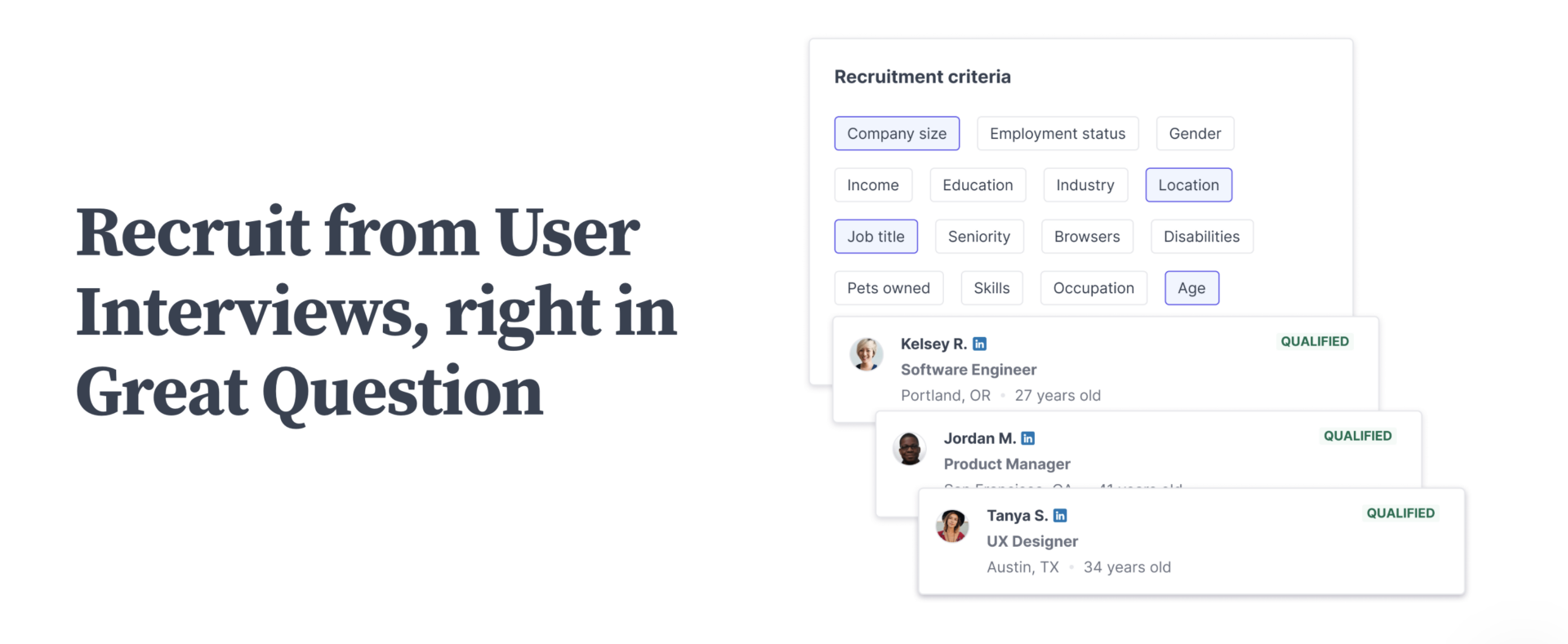
Our research revealed a core issue. Each user segment not only had different needs, they also had fundamentally conflicting expectations of how the interface should work. A single unified interface would not serve either group well. This insight led to a breakthrough in our approach and shaped the design direction that followed.
Designing for spectrum of users
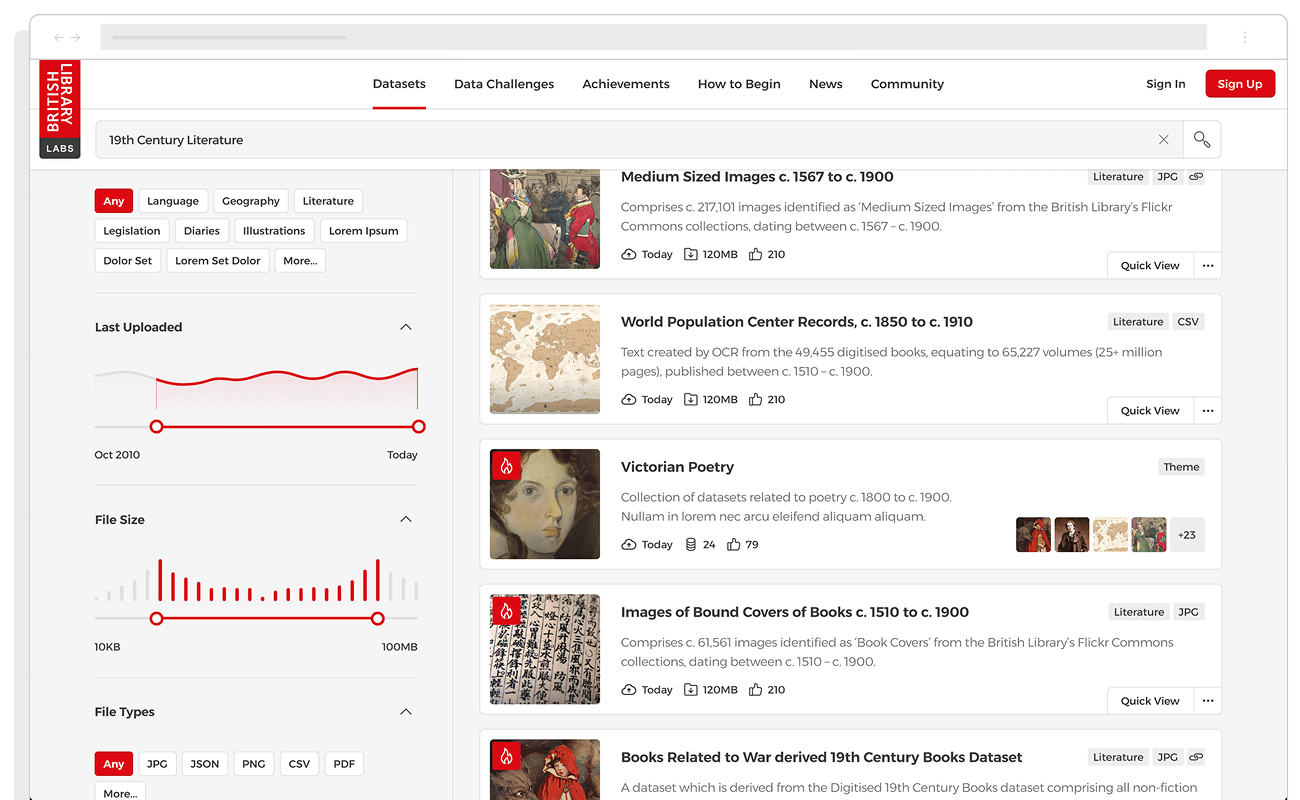
To reconcile the conflicting needs of different research audiences, we designed a progressive, funnel based system that adapts to each user’s level of expertise. Casual users begin at the top of the funnel, where they encounter simplified entry points, visual navigation patterns and guided pathways that encourage discovery. As users become more confident or more invested in their research, the interface progressively reveals additional features and tools.
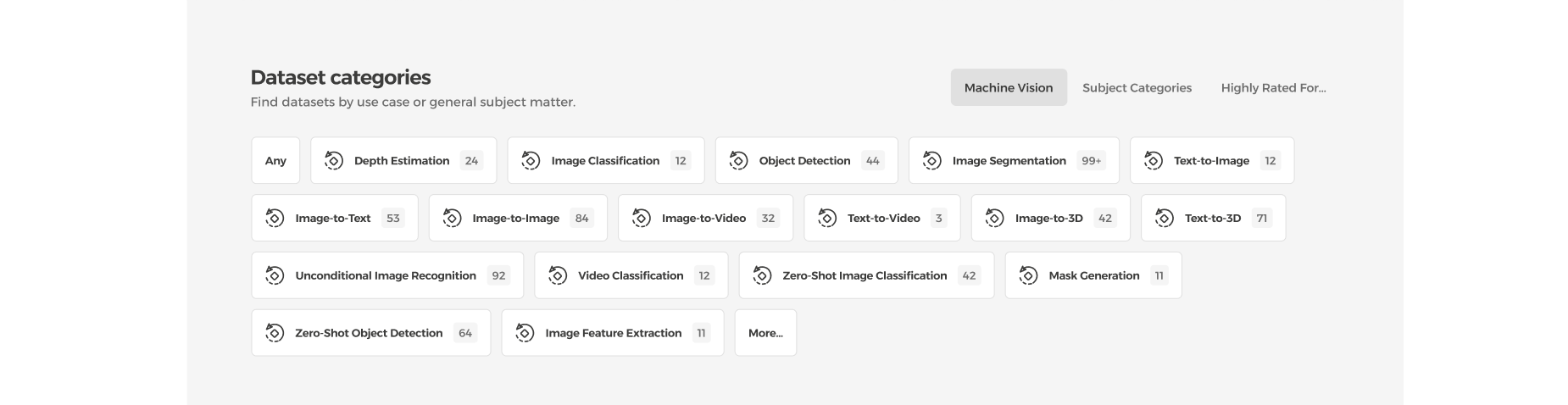
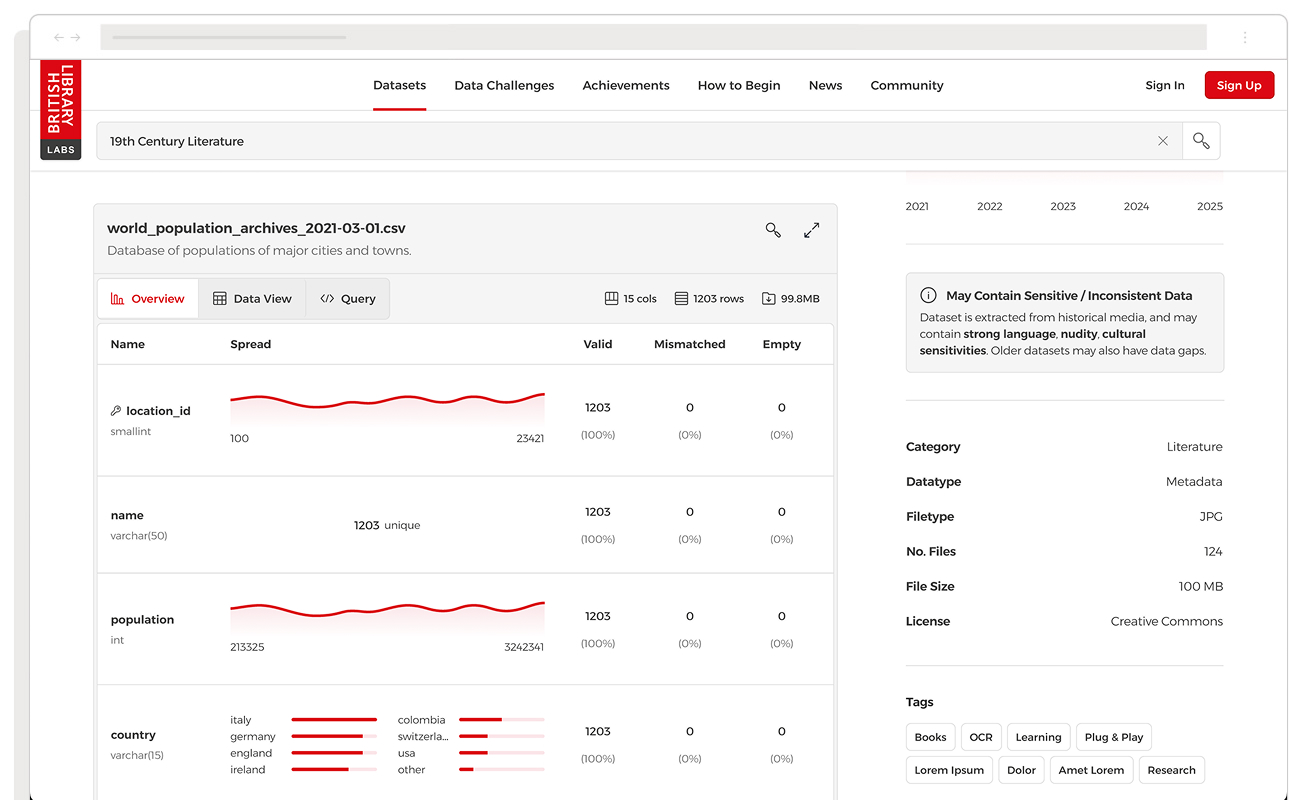
For advanced researchers, the bottom of the funnel offers powerful capabilities including detailed metadata controls, bulk downloads and support for external analysis workflows. Crucially, we recognised that researchers operate in two very different modes. Some pursue visual, exploratory journeys, while others need immediate access to structured datasets. The final design supports both through a dual interface paradigm: a discovery track focused on exploration and a data track that foregrounds direct access and export options.
Creating the redesigned experience
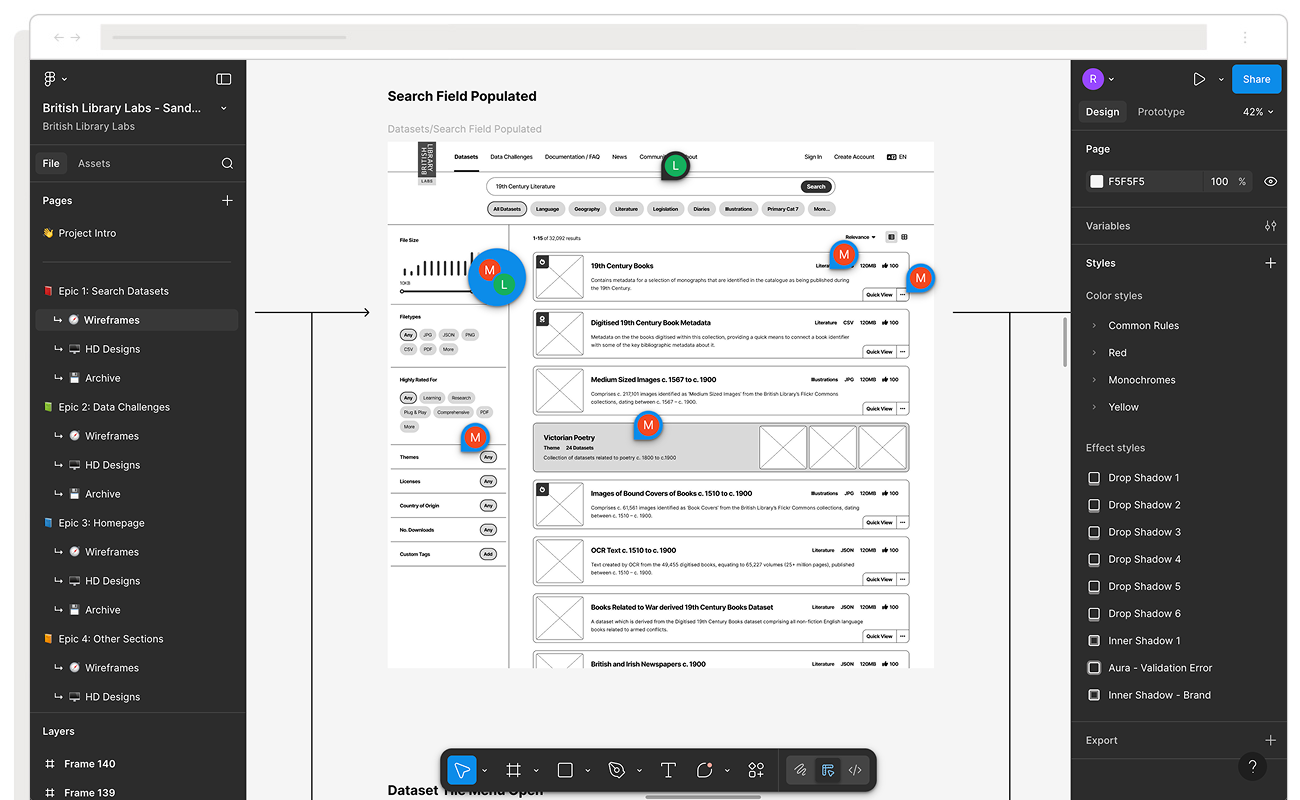
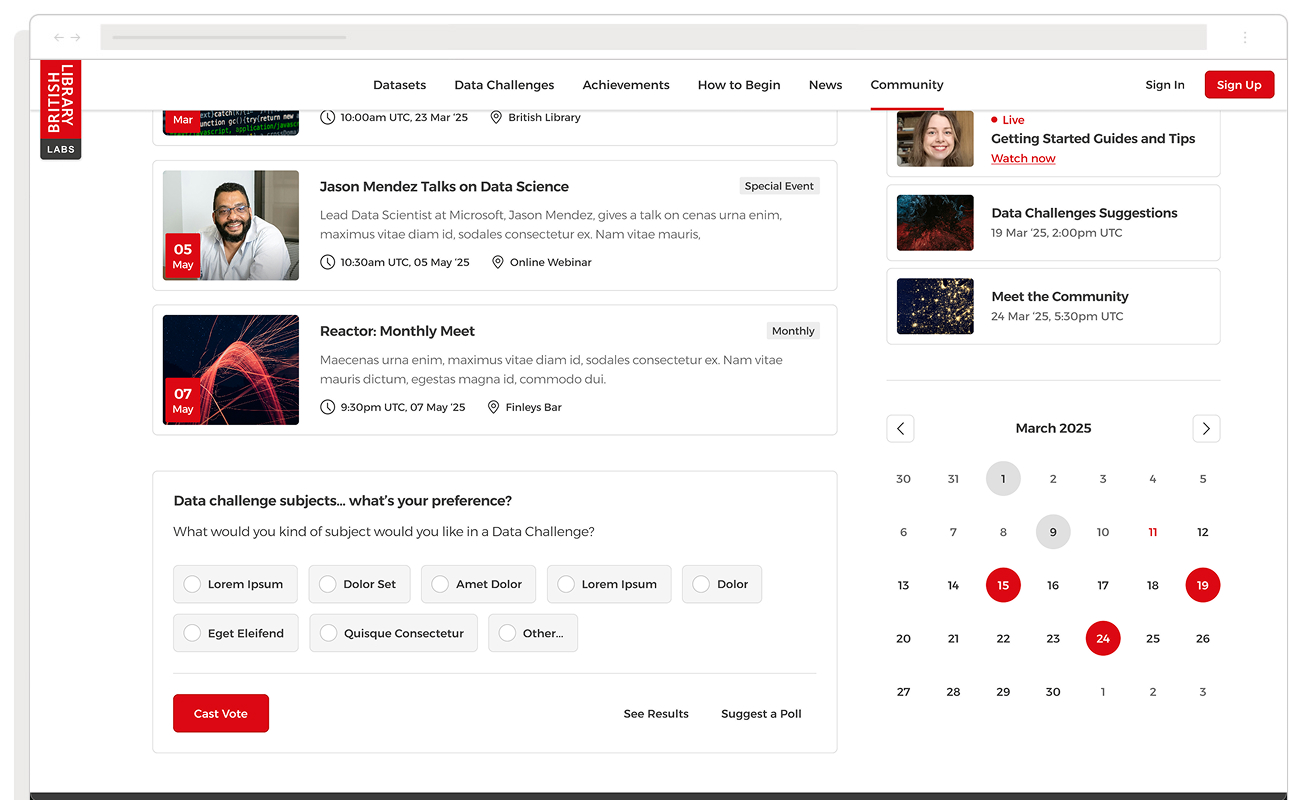
Once the strategy was validated with real users, the team translated it into a high fidelity, fully interactive prototype in Figma. Every component, interaction pattern and transition was designed with precision, ensuring clarity across both simple and advanced research pathways.
The prototypes provided stakeholders with a complete picture of the redesigned experience, enabling rapid alignment. They also supported an efficient handover to development by including comprehensive documentation covering responsive behaviour, interaction logic and design system principles. The resulting design system left minimal ambiguity and equipped the engineering teams with everything needed for implementation.
The Outcome
The progressive, funnel based approach successfully addressed the challenge of serving radically different user groups. Casual visitors now benefit from clearer navigation, more intuitive entry points and fewer cognitive barriers. Advanced researchers gain improved metadata handling, structured access to datasets and smoother workflows for computational research.
User testing confirmed strong improvements in discoverability, efficiency and perceived usability. The platform now adapts to the user rather than expecting every user to adapt to the platform. The design foundations we created also position British Library Labs for future innovation, including the integration of emerging AI capabilities such as intelligent search suggestions and computer vision supported document analysis, while maintaining the user-centered principles that shaped the project.
The design framework we established for the British Library Labs provides a foundation for integrating emerging AI technologies, be it from computer vision for document analysis to intelligent search suggestions, while maintaining the user-centered principles that made this project successful.